Photo: Elisa HassertThree consecutive nights. Two artists. A live concert, a cinema transmission across four countries, and a worldwide livestream. One control room had to translate each performance into a different screen experience. In October, Hamburg’s historic Deutsches SchauSpielHaus became both a concert venue and the center of a live multicamera production reaching far beyond the room.
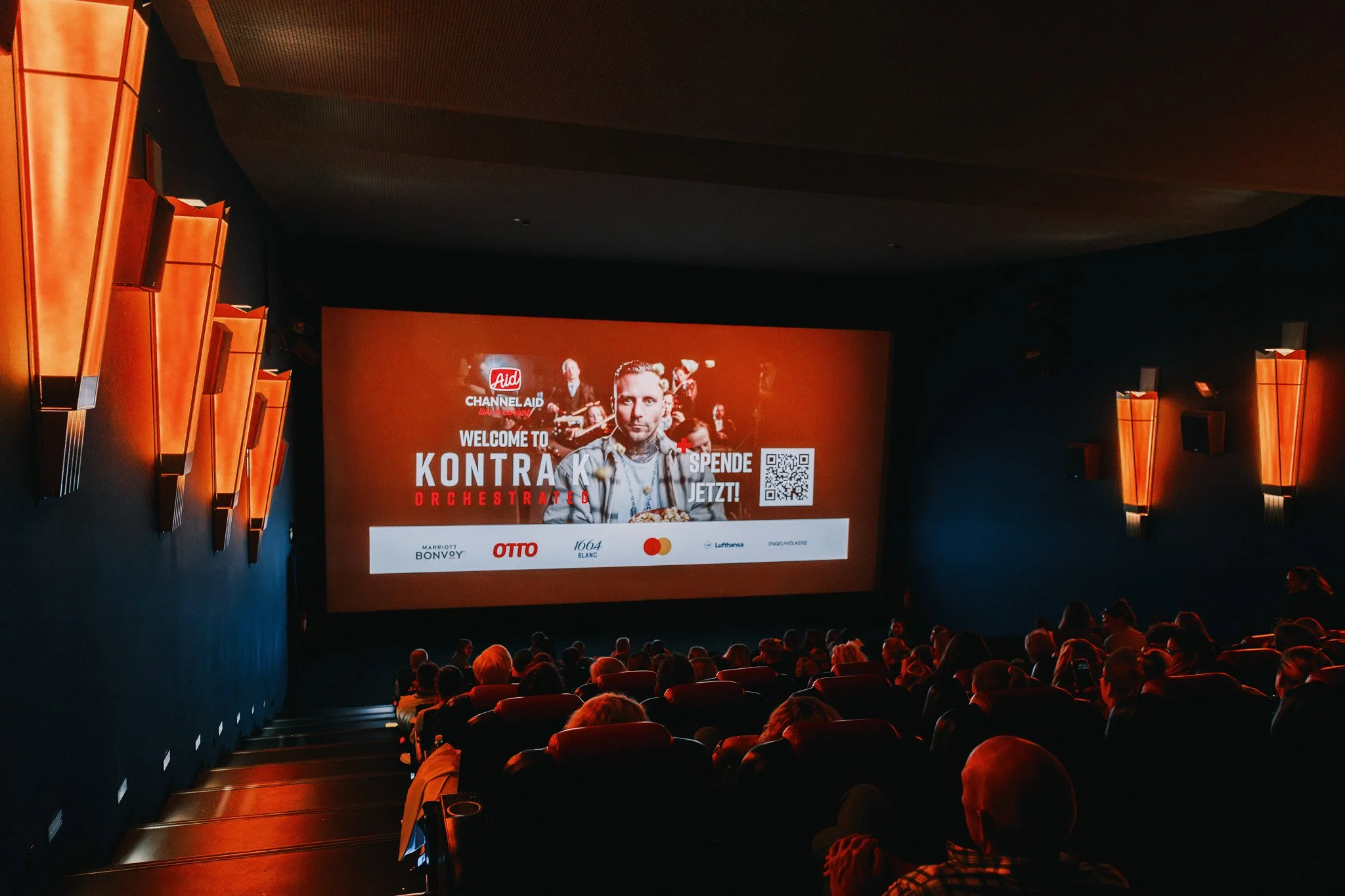
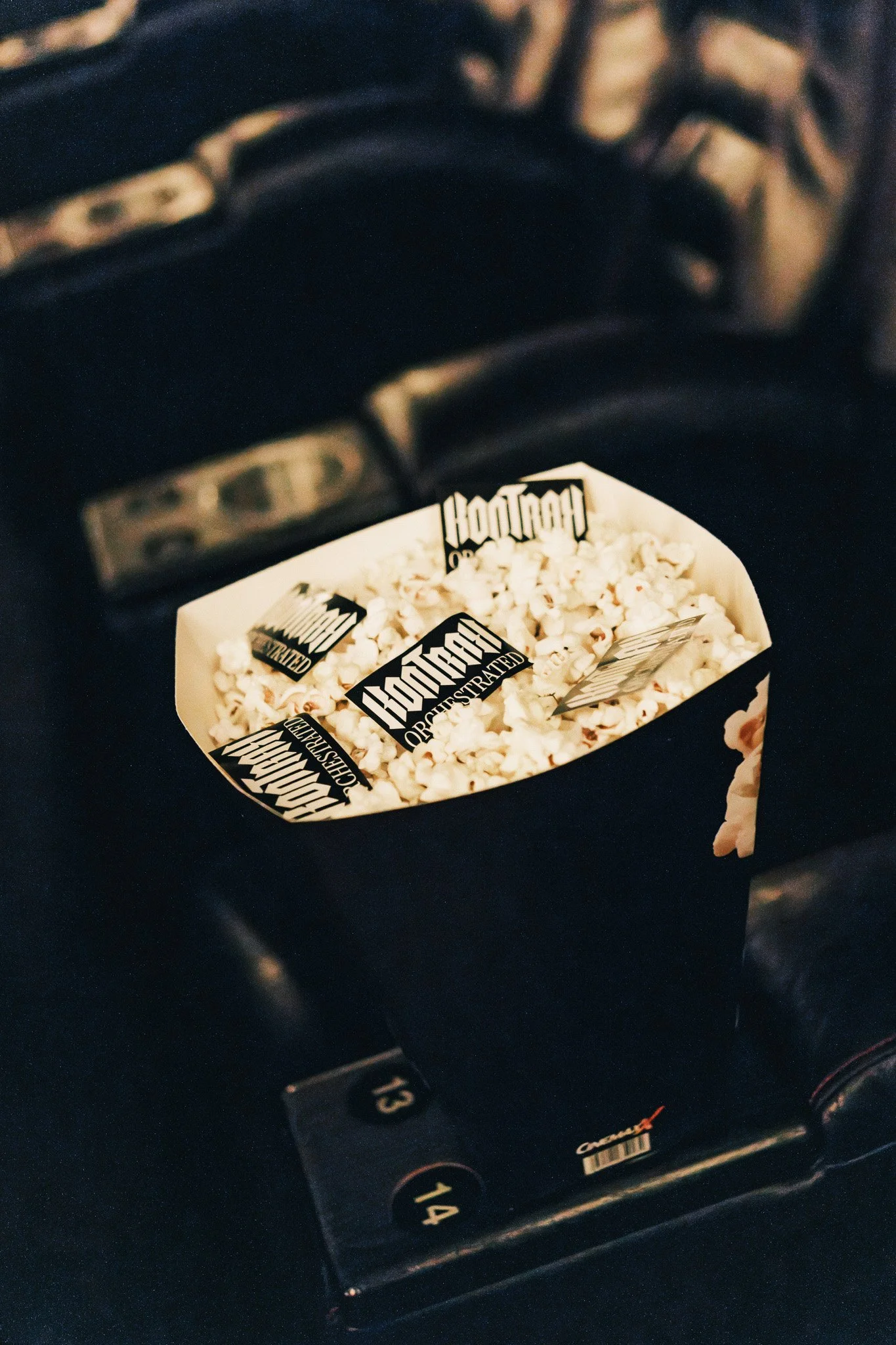
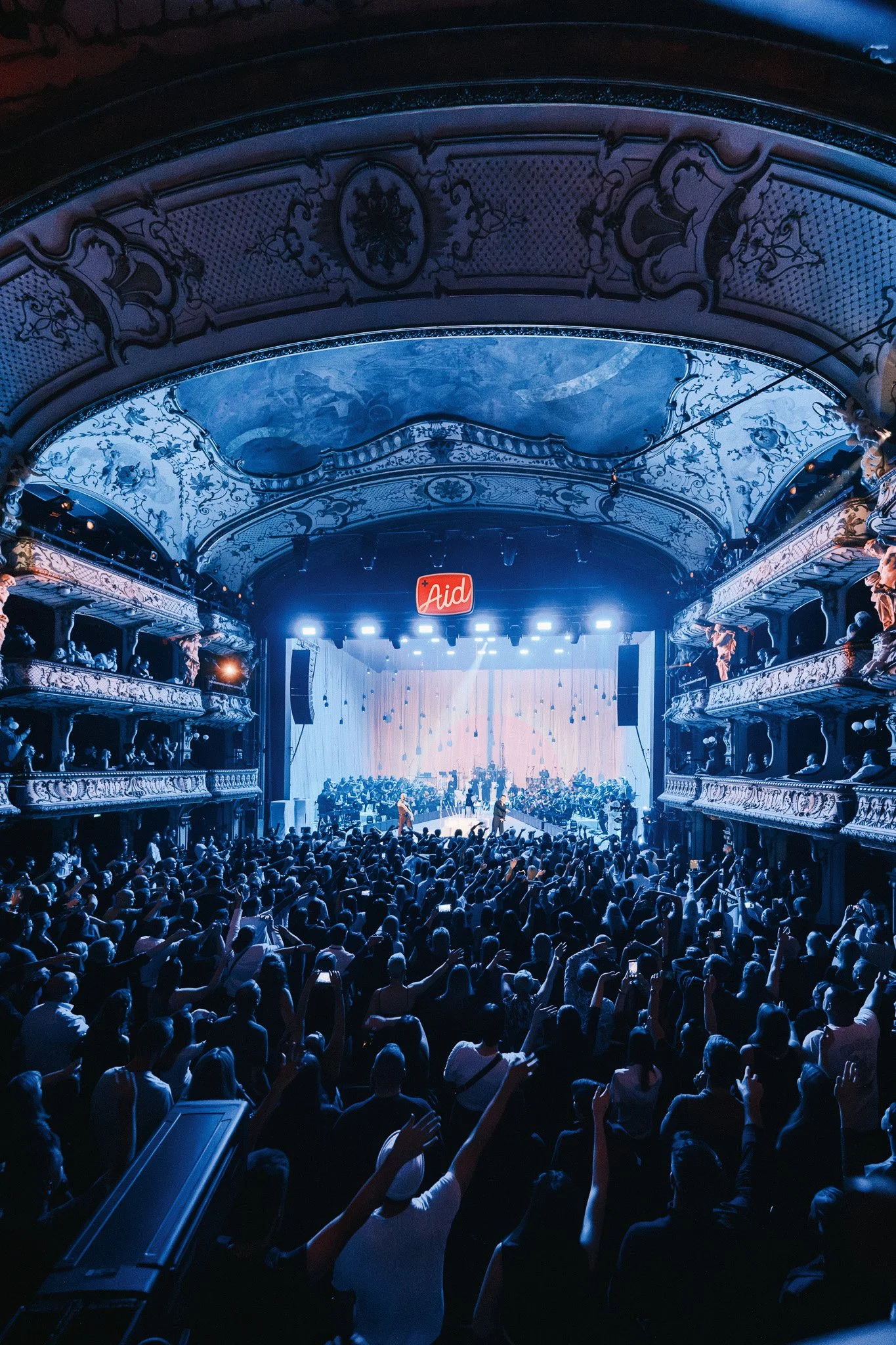
On October 1, Kontra K opened Channel Aid 2026 alongside the Lufthansa Orchestra under conductor Kristjan Järvi. The following night, his second performance was transmitted live to more than 220 cinemas across Germany, Austria, Switzerland and Luxembourg, where over 30,000 people watched simultaneously.
Then the production changed again.
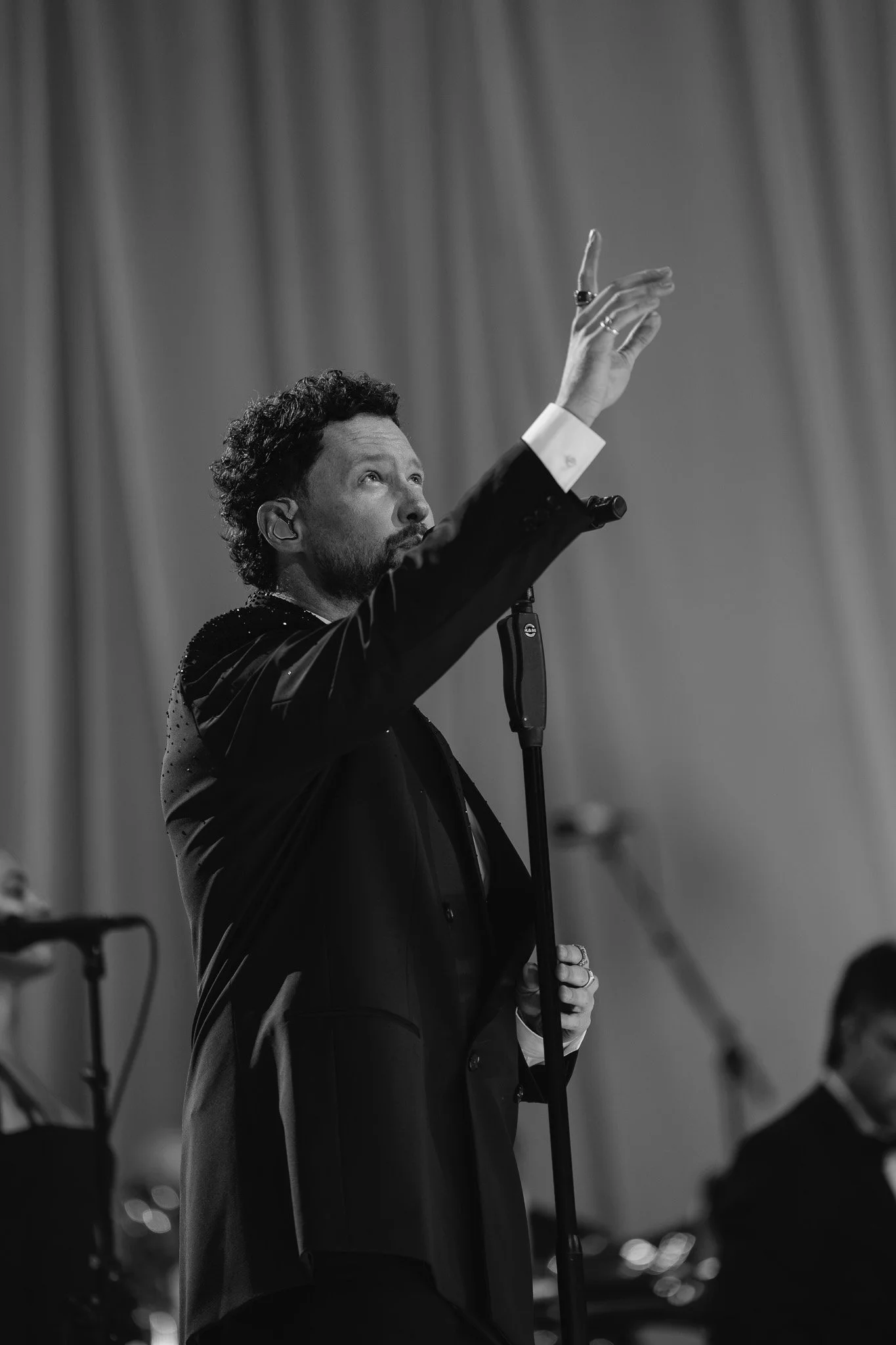
On October 3, Calum Scott took the stage with the orchestra for the final night of Channel Aid. This time, the performance was streamed worldwide on YouTube and TikTok LIVE, reaching nearly 100,000 viewers.
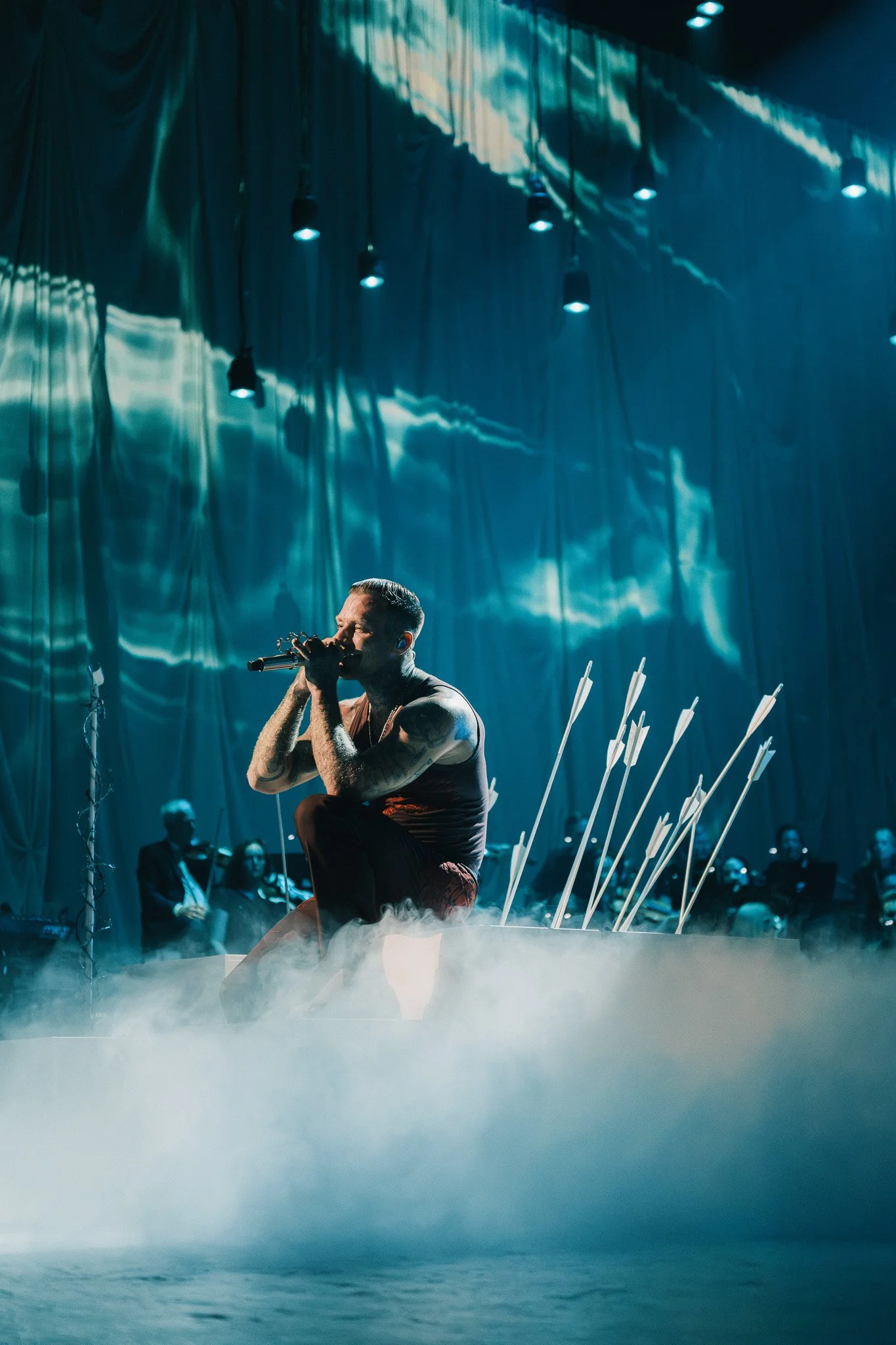
Photos: Elisa Hassert (1), Pascal Griesel (2)Across all three nights, Pasquale Roedel served as Multicamera Director. His job was not simply to document what was happening onstage. It was to shape how another audience experienced it through the screen: deciding where to look, when to reveal the scale of the room, when to move closer, when to cut - and when an image was strong enough to leave alone.
At Origin Film Productions, where Roedel serves as Head of Live Broadcast, that thinking had begun long before the first camera went live. His involvement in Channel Aid extended from camera positions, optics and movement to conversations around lighting and stage action, connecting departments around a shared visual direction for the broadcast. We spoke with Pasquale about what happens between the stage and the screen - and how the same production infrastructure became three distinctly different live experiences.
As Multicamera Director, what are you actually directing when the concert itself already has its own staging, lighting and musical direction?
“I'm shaping how the audience experiences the performance through the camera.”
That means deciding where we look, how close we feel to the artist, when we reveal the scale of the room and when we stay with something intimate. I'm always looking for ways to push the visual language of live production beyond familiar television conventions. I like experimenting with camera systems, optics, lighting and movement to create something that feels specific to the artist and the production. For Channel Aid, that work began months before we arrived in Hamburg. We developed the artist's and management's initial ideas through conversations about staging, camera positions, lenses, filters and movement. My role also involved helping develop the stage action and connecting the different departments around a shared visual direction.
For Kontra K, I worked very closely with lighting designer Bertil Mark. We purposely kept room to refine the lighting during soundchecks and camera work on site, because what something looks like in the room and what it becomes through the camera can be two different things. The live cut, camera choreography and lighting all needed to work together - especially for the cinema audience. There's also a team aspect that matters enormously to me. I want people to enjoy working together and feel comfortable contributing ideas. A good atmosphere gives creativity room to develop.
Photos: Maxi Ambrunnen (1), Elisa Hassert (2)You had an unusual opportunity with Kontra K: you directed the full show on October 1 before the cinema broadcast the following night. What did the first night teach you?
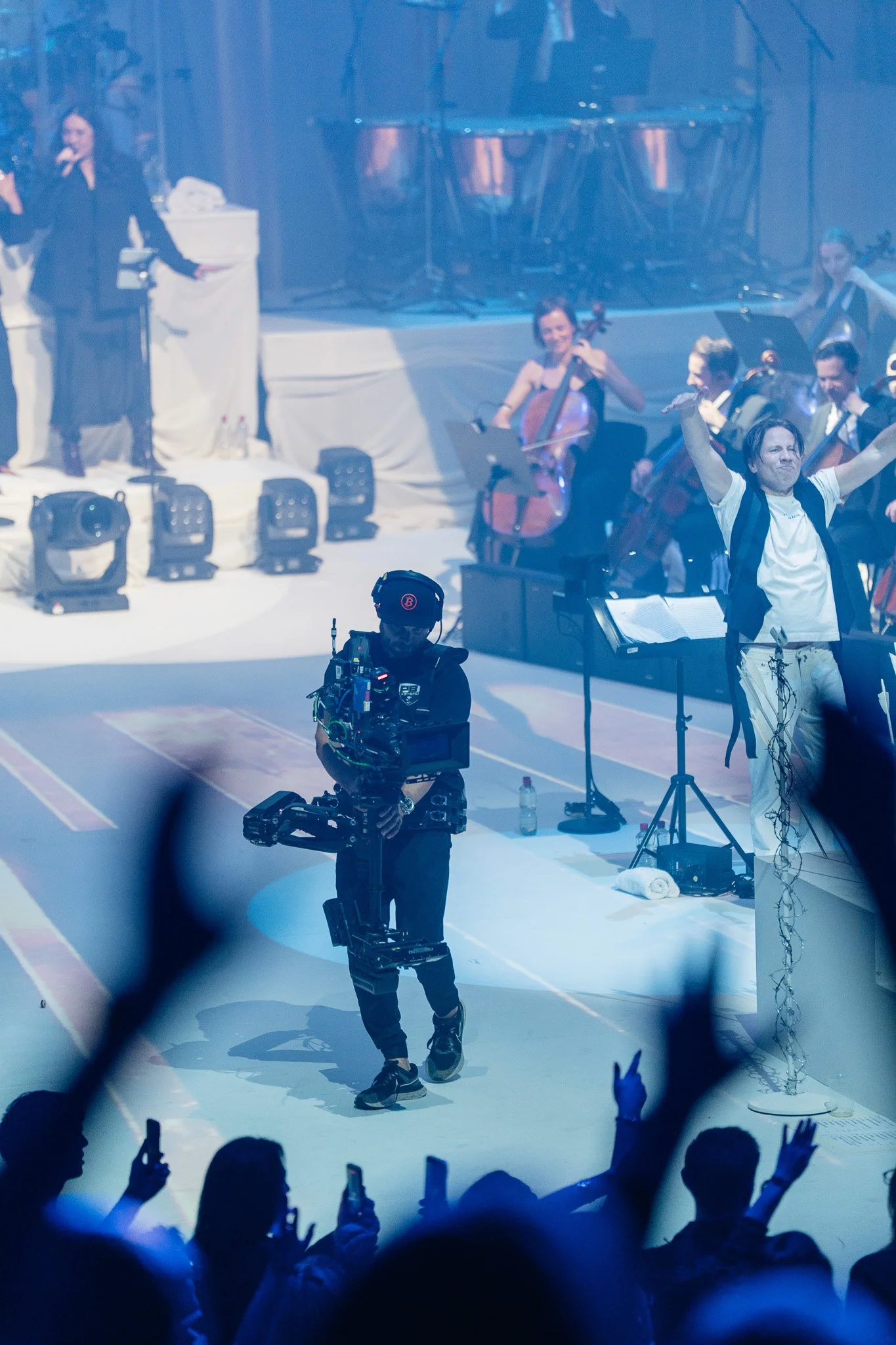
The first night was our first opportunity to see the entire show unfold with an audience in the room. We had obviously done soundchecks and preparation, but we hadn't run the complete show in that environment. I was taking notes on framing, Steadicam routes, lighting and the moments that really worked, and then we refined those things with the team for the cinema night. One example was a moment when the audience held up their phone lights. I wanted an over-the-shoulder shot of Kontra facing this sea of lights with the architecture of the room around him. The filter we used on the first night made those lights too pronounced, so for the cinema broadcast we switched to Cinema Mist and got the softer image I had wanted. But making that image work also meant thinking beyond that one camera. We coordinated the other angles so our Steadicam could stay onstage for the reverse perspective without suddenly appearing inside our close-ups.
Even the timing between the physical room and the cinemas required its own choreography. The introduction inside the venue was roughly fifteen minutes; the cinema introduction was closer to five. They were two different presentations, but both audiences had to arrive at the beginning of the musical performance at exactly the same second. That took coordination with stage management so those two experiences could meet at precisely the right moment.
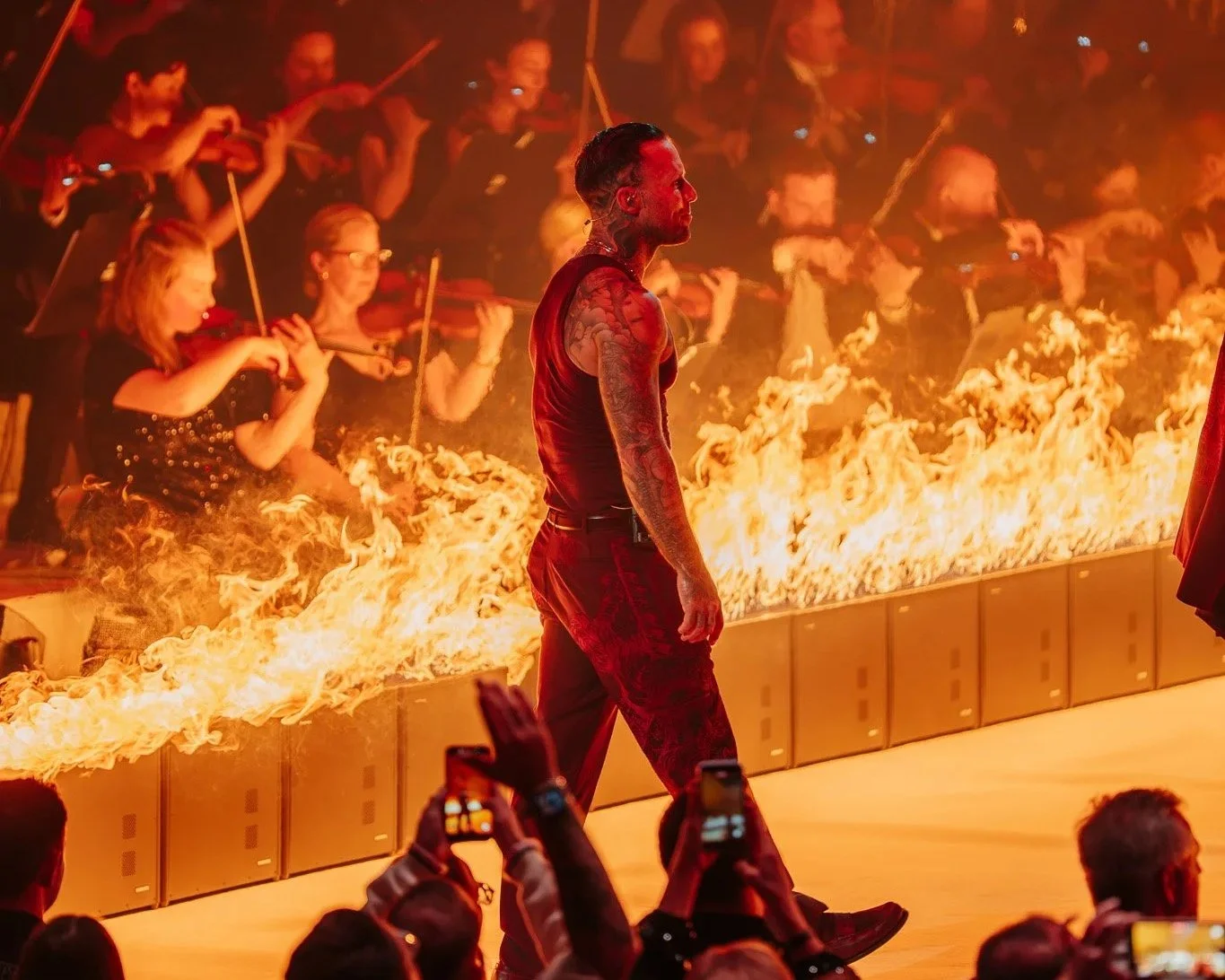
Photo: Pascal GrieselDid knowing that the October 2 image would be several meters wide change the way you directed?
Absolutely. I wanted to give people time to take in the image. A wide shot in a cinema gives you the opportunity to explore the stage and understand the space. You don't necessarily need to keep redirecting the audience's attention. So I was very conscious of allowing certain shots to breathe. We briefed the camera team with that scale in mind as well. Small movements, fast pans, focus errors or camera shake become much more noticeable when the image is enormous. Close-ups have a different impact too. Even the graphics needed reconsidering. I worked with our graphics designer to make the inserts smaller and less dominant because they occupy a completely different amount of visual space on a cinema screen. And I definitely didn't want huge, rapid zooms making the audience feel like they were in the Millennium Falcon about to jump to lightspeed. But slowing something down doesn't mean losing the rhythm of the music.
It means deciding where that energy actually belongs. If a lighting effect or pyro cue needs the full stage to make its impact, I want to be wide enough for the audience to experience it. If the important thing in that moment is the artist's expression, I want to be close enough to read it.
Kontra K's music was being reinterpreted with an orchestra. How did that change the visual rhythm of the show?
The arrangements changed the way the songs felt, and that naturally changed the way I approached them visually. Some of the rap material suddenly had much more space. Strings or brass could become an important part of the musical story rather than simply accompaniment. We made notes during soundchecks to identify those moments. There was one passage with flames, for example, where the strings were delivering these strong accents that the artist was picking up. I wanted the pictures to show that relationship between the vocal, the orchestra and the visual impact happening onstage. Kristjan Järvi was also wonderful to show. His conducting has so much energy and personality that he becomes part of the performance visually. I had worked on an orchestral New Year's concert in Riyadh earlier in the year, and that experience definitely helped - particularly in listening for which sections and musical accents deserve their own moment on screen.
When we watch the finished broadcast, a cut can feel completely instinctive. Sitting in front of the multiviewer, how far ahead are you actually thinking?
I'm very much in the present, but at the same time I'm constantly looking for the next possible image. What is happening now? What might happen next? Which camera will allow us to follow it? I don't think of it as being a fixed number of bars ahead because a live performance can change immediately, and I have to be able to change with it. But music gives you signals. If I want to show a particular drum hit, for example, I need to get to the drummer before the stick lands. If I wait until I hear the hit and then cut, I'm already too late to actually show the action properly. And that anticipation depends on the whole team. The operator needs to be ready and the vision mixer's execution has to be precise. It becomes this incredibly fast conversation between listening, watching, deciding and responding.
Photos: Pascal Griesel (1), Elisa Hassert (2)How much, then, is planned - and how much do you deliberately leave open?
The camera plan, lenses, filters, lighting approach and show timings were prepared. I also had my own notes identifying specific musical and visual moments I knew I wanted to catch. We pre-produced an opening sequence with an anamorphic lens in consultation with the artist as well. But you need space around that structure. Kontra changed some of his routes between the two nights and went into the audience. At that point it doesn't matter where you expected the artist to be. You have to respond to where he actually is. One of my favorite little moments came when he took a fan's phone and started filming himself. We were able to move the Steadicam behind the phone and suddenly had the phone screen, Kontra and the audience together in one image. Nobody needed to have storyboarded that six weeks earlier. It came from what was actually happening in front of us. I like having a clear visual framework while remaining completely open to the performance. When something changes, I need to form a new picture quickly and communicate it to the camera team.
After two nights with Kontra K, you moved directly into Calum Scott. Did you have to reset the visual language?
Completely. They were two different musical worlds, and they also had different lighting designers and lighting approaches, so the atmosphere changed from the outset. Kontra had a harder visual energy overall, even though there were softer moments within it. His interaction with his fans was such an important part of the performance that I wanted the coverage to keep returning to that relationship. With Calum, I wanted something softer and more emotionally focused. The camera moves became calmer. The cutting pace relaxed. I used more dissolves rather than hard cuts and thought a lot about how one composition would blend into the next. There was less crowd interaction, so our emphasis naturally shifted toward the artist and the emotional world of the songs.
The Deutsches SchauSpielHaus is beautiful, but it wasn't built around a modern concert broadcast. How did the venue affect your camera plan?
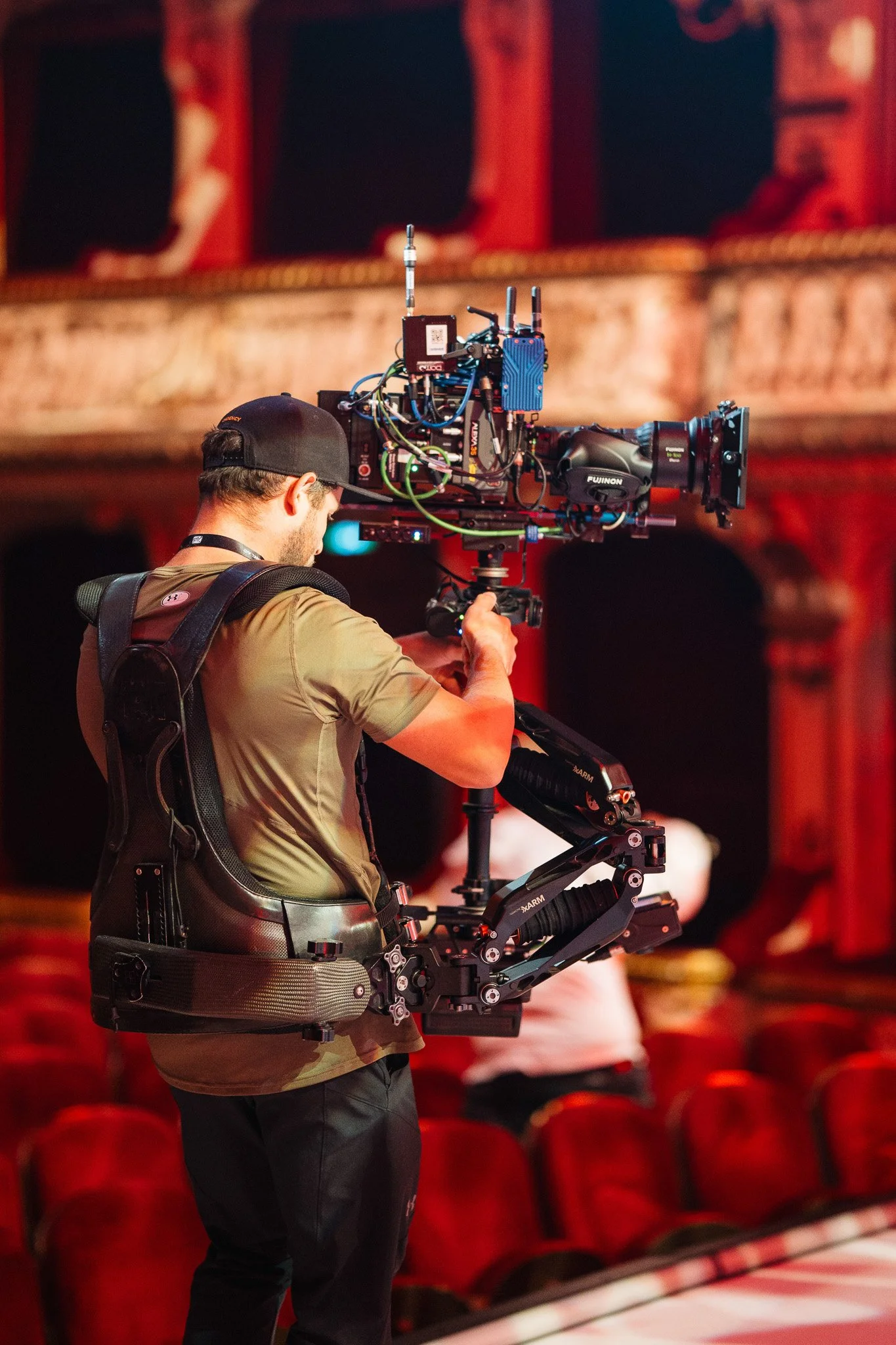
The building itself was a big part of the challenge. It's a beautiful historic theatre, but space, mounting options and structural loads all need careful consideration. You can't simply decide you want a huge crane somewhere and assume the building will accommodate it. One particularly useful solution was a modified Polecam-style system weighing around sixty kilos. It gave us crane-like images while fitting within the limitations of the venue. We could bring movement and scale into the pictures without needing the footprint of a traditional large crane. I enjoy that kind of challenge because it forces you to explore another way of achieving the image rather than giving up on the image. Our main camera platforms also needed careful planning. They had to be stable and at exactly the right height for the perspectives we wanted, while considering the artist's eye level and what would happen when the audience stood up. Inside the orchestra we used smaller remote cameras, which gave us those perspectives without filling the wide shots with visible camera equipment. And the Steadicam was another essential part of the visual language. Every position needed to contribute something different - from showing the scale of the room to giving us the intimacy of being very close to the artist.
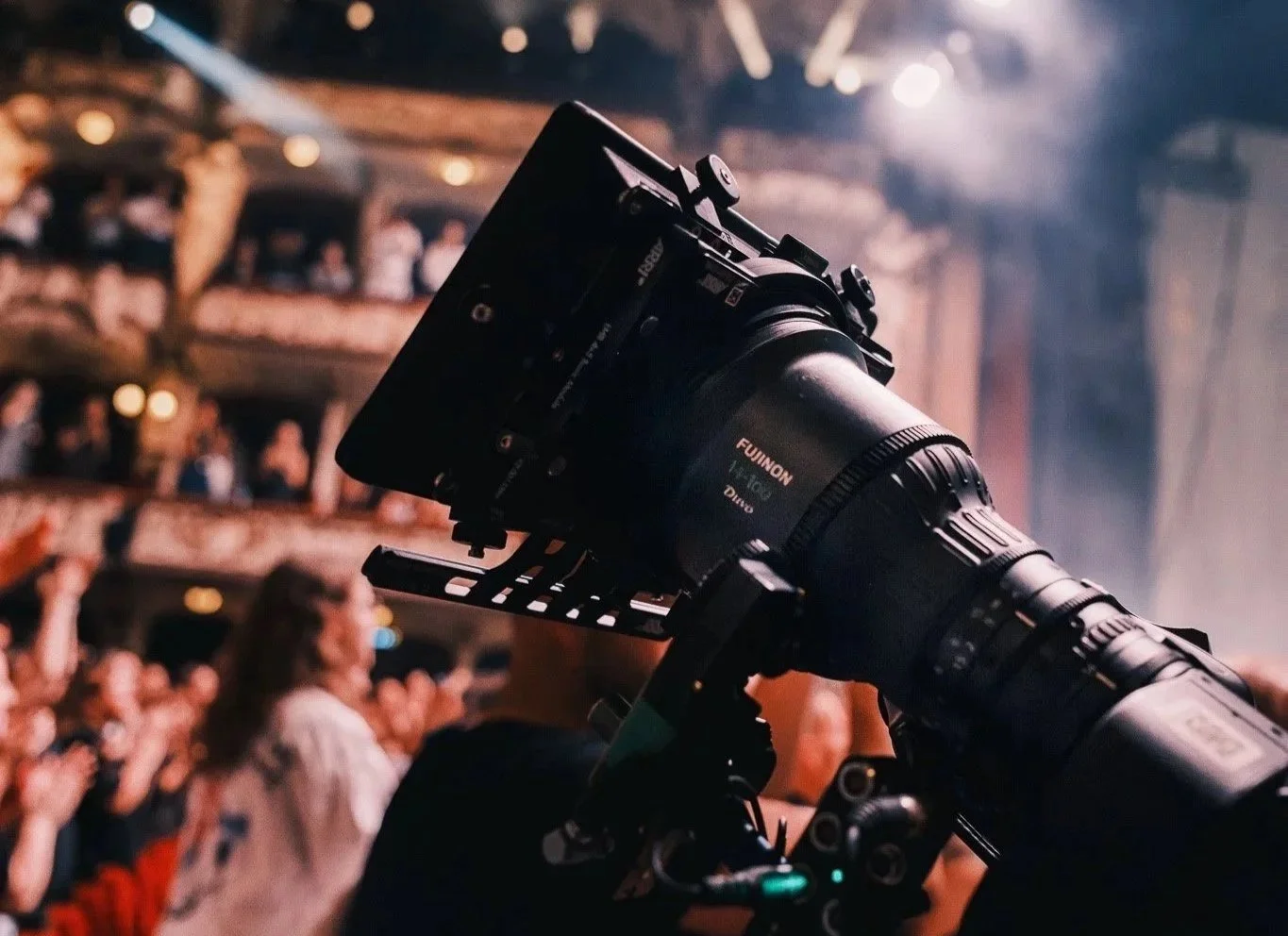
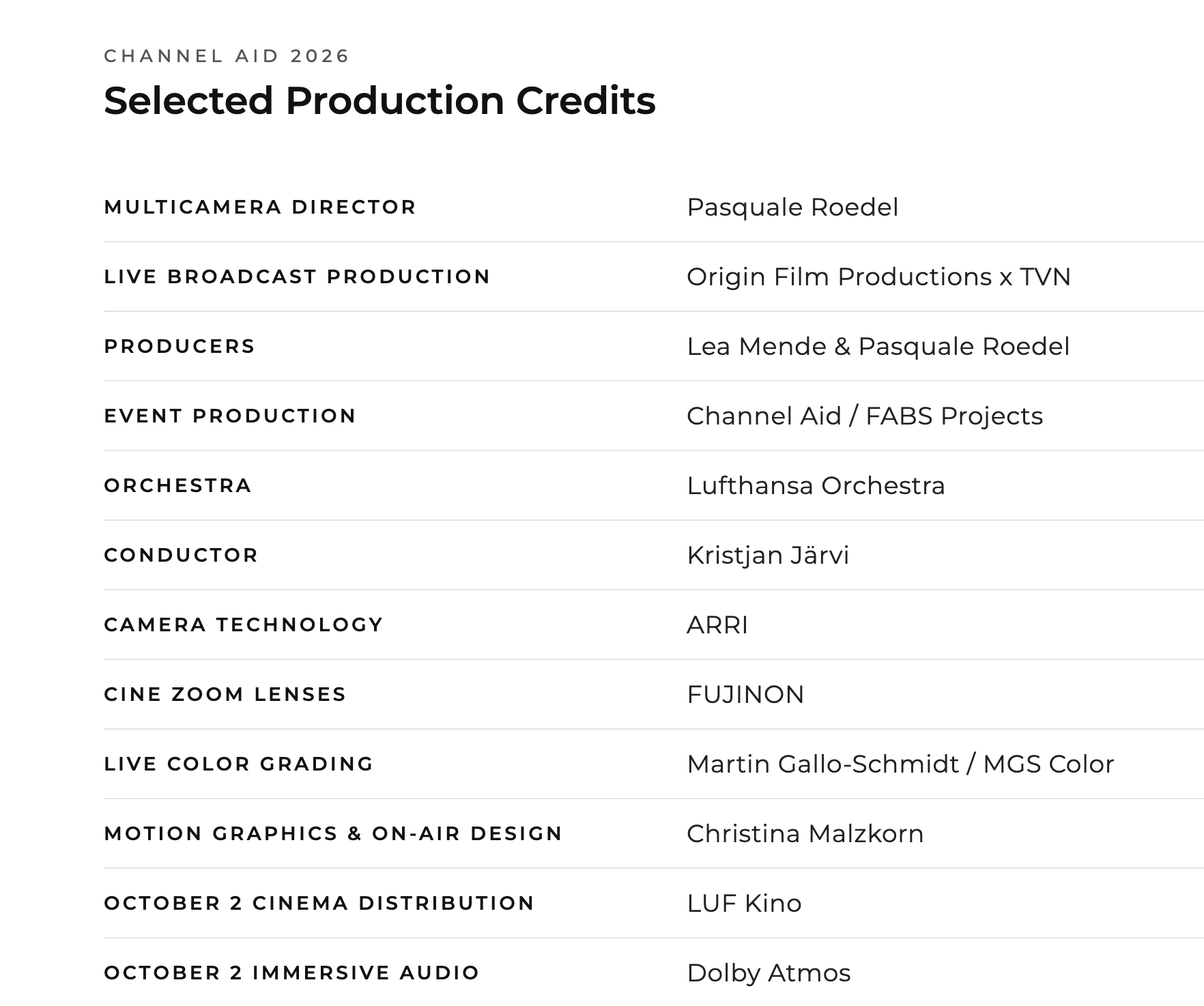
Photo: Elisa HassertChannel Aid also continued something we had been exploring with ARRI earlier in the year: bringing cinematic camera systems deeper into traditional live-production workflows. What did the ARRI and FUJINON setup actually give you creatively?
I’ve been in contact with ARRI for a long time. Earlier on, we were adapting AMIRA cameras for this kind of work, so seeing what the ALEXA 35 Live now offers is exciting. I Love the clarity of the FUJINON Duvo lenses, including the HZK 25-1000 box lens. And when I need a zoom for Steadicam work, I’ve become a big fan of the 14-100 mm Duvo. Combined with Martin Gallo Schmidt grading our ARRI LogC images live, it was a setup that really suited the cinematic look we were trying to create. That combination - cinematic image-making with the responsiveness of a live production - is what interests me. I want to keep exploring what a live concert can look and feel like. But the technology cannot create that by itself.
The look depends on the people around the equipment. We developed the lighting specifically for these cameras and this production. Lighting, color, video engineering and the operators all had to work together. We were also working with more open apertures than in the conventional television setups I was comparing it with, so framing and focus demanded particular precision. Ultimately, an emotional moment needs more than image quality.
Is there a difference between a technically perfect shot and the right shot?
Absolutely. An emotional moment needs more than image quality. During Calum’s speech, for example, his voice needed to remain the focus. The piano was gently supporting him and the audience sound came in at the right moments. The camera was close, the framing was considered and the movement was calm. The decision was to hold that image. That gave the audience space to actually enter the moment. That’s where all of these decisions and all of that collaboration ultimately matter.
Were there images during the three nights that you hadn't planned, but knew immediately you wanted to use?
One image I chose spontaneously during Calum was an over-the-shoulder view from behind him that brought Calum, the orchestra and the audience into the same picture. It was a beautiful way to show the relationship between all three. With Kontra, we also had a reverse angle from a remote camera that placed him in front of the audience. Once you saw how strongly the crowd was responding, that perspective became especially valuable. Those are the images I'm looking for while the show is happening. There is a visual plan, but I also need to recognize what a camera is giving me in that particular moment and use it when it belongs.
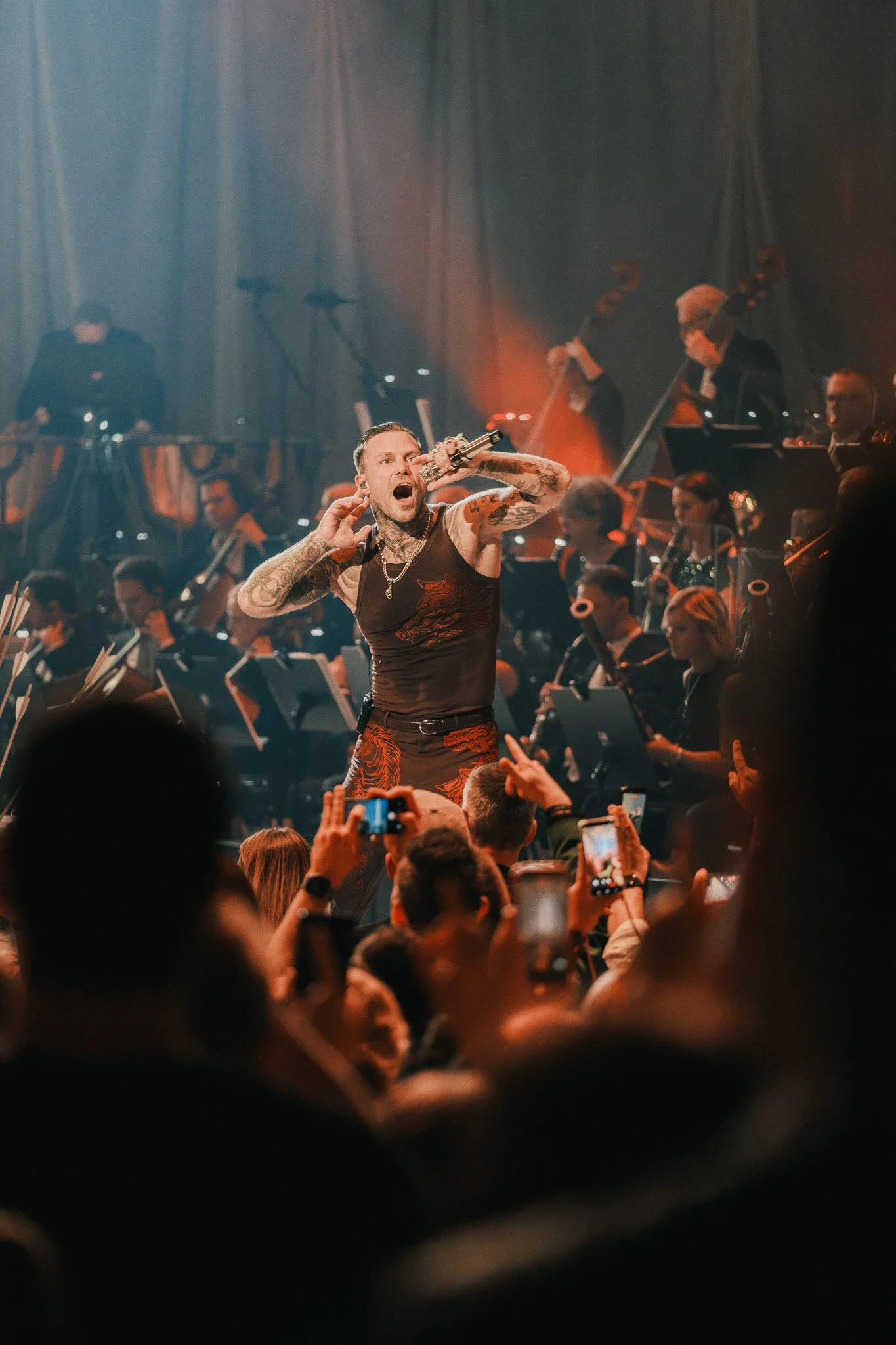
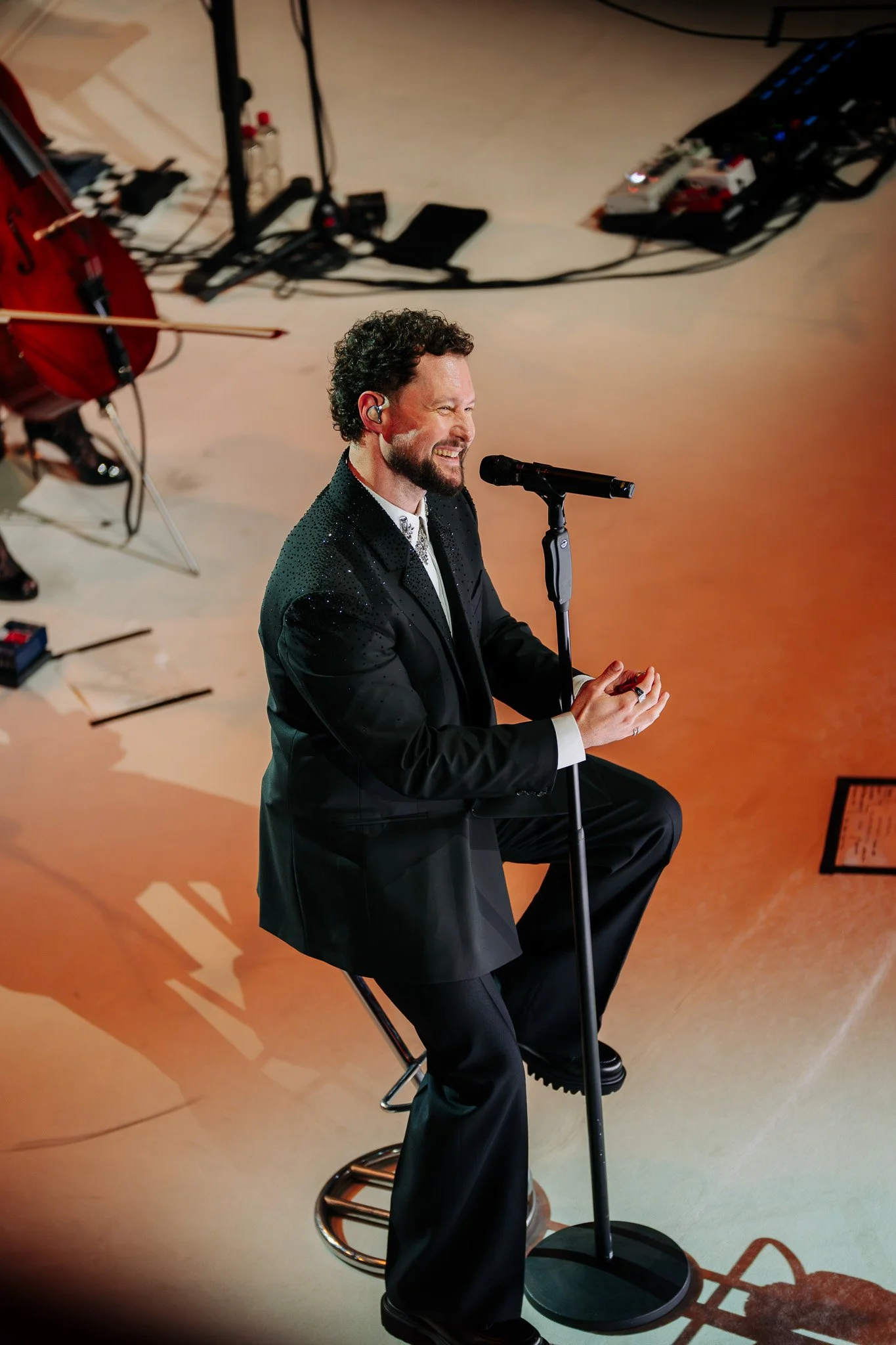
Photo: Elisa Hassert (1), Pascal Griesel (2)If you had to choose one image from Channel Aid that stays with you, what would it be?
I'd actually choose one for each artist because they capture two very different evenings. For Calum, it would be his emotional speech. The closeness of the camera, the quiet piano and the decision to stay with him really captured the feeling of that night. For Kontra, it would be a sequence of him interacting with the crowd - hands in the air, people singing, everybody responding to him. It showed how much energy there was inside the SchauSpielHaus. And people were joining in at the cinema screenings too. They were singing and dancing along there as well. That connection is what I wanted to bring across the screen. Ultimately, the biggest compliment for me is when somebody watching feels something. If they get goosebumps or have to hold back a tear, then the emotion has reached them. Something my mentor, Volker Weicker, once said has always stayed with me:
“My client is the viewer.”
That’s the person I’m making the pictures for.
For a closer look at the productions, including selected live broadcast clips and event photography, explore both projects here:
KONTRA K: Orchestrated Live at Channel Aid & Calum Scott: Orchestrated Live at Channel Aid